Monday, March 11, 2013

Mind your Manners! Dining etiquette tips for Young Professionals

As you begin attending networking events and setting up dinner meetings with associates, dining etiquette becomes more important. It’s common knowledge that nonverbal cues contribute to how you present yourself and dining is a perfect example of that.

I recently went to a great Dining Etiquette class and I wanted to share a few of the lessons I learned.

  • Silverware
    • The silverware in front of you shows what meal you’ll be having. Since you never reuse utensils, you’ll be using one set per course.
    • Start from outside in. Begin by using the silverware on the outside and work towards the utensils closer to your plate.
  • Sitting
    • Sit down from the right of your chair.
    • Wait for your host to sit first.
    • Only take off jacket if host does. The instructor said that leaving clothes on to signifies power.
    • Be aware of your real estate, know which is your water, your silverware, your plate when you sit down.
    • Fold your napkin in half. Place it in your lap with fold near your knees so that you can easily brush off discarded food if need be.
  • Being served
    • Wait staff serves on left and clears from right. Keep this in mind during the meal so that you know which way to lean. Be sure to thank the wait staff!
  • Eating
    • Use “continental” style of eating – hold fork down, use knife to push food on plate. (see resources)
    • Scoop soup away from self. Be sure not to slurp or blow on soup.
    • If bread is offered, you may take bread and place it on the proper plate. Our instructor told us not to move bread plate up. Proper etiquette is to break off bite sized piece, apply butter, chew, repeat.
    • Salt and pepper travel together. Consider the two married – pass and receive them together.
    • If you have a piece of meat don’t cut up the whole piece. Be sure to cut off one piece at a time, chew that piece, and repeat.
    • Try not to mix all of your foods together. If there are separate pieces of the course that you would like to mix, you can mix them on a small scale – basically for each bite. Please refrain from mixing the whole plate together into one big mass.
    • Try food before salting. Our instructor shared a story with us about a job candidate heavily salting their food before trying it, the interviewer concluded that this was an impatient person who acted without proof and passed on them. While this is an extreme, tasting before salting probably makes sense. Also, salting before tasting can insult the cook if the meal is homemade!
    • Only eat a bite at a time so that you can talk. Be sure to only eat small pieces of food so that you aren’t trying to speed chew to answer a question.
  • Finishing your meal
    • When done with soup, leave your spoon in soup or on the rim.
    • Put silverware down properly to show resting or that you’re done.
    • Don’t remove unwanted food from plate, just push it aside and ignore it.
    • If you need to leave, just say “excuse me” and put your napkin on chair, if leaving permanently just say “it was wonderful dining with you”.
    • 3 B’s of leaving a conversation - bathroom, bar, boring. Be sure to be polite when leaving a conversation!
  • Paying
    • If this is a free dinner or event you pre-paid for, then you’re all set!
    • If you’re hosting and paying -try to set up a way to pay beforehand. Either pre-pay or put a card on record to avoid awkwardness at the end.
    • If you attended, be sure to send a thank you note. Hand written preferred!

We hope that this has been helpful! Keep in mind that etiquette changes depending on the situation and that while we discussed some great general rules, this was mostly tailored to a more formal event.

Resources:
·        General videos

***
Phoebe Farber is the Founder & CEO of Prospective Plus, which has built CareerApp.me - the Common App for Jobs. She is from NY but is currently based in Boston as she attends Northeastern University. Feel free to reach out to Phoebe at phoebe@careerapp.me .

Saturday, March 9, 2013

4 Ways to Share your CareerApp profile!

Now that you've created your CareerApp.me profile be sure to spread it around! As an active job seeker, the more networking, the better. Below are a few ways that you can share your profile link to others!

  1. Social media: 
    • Add your link to your profile. Sites to consider are:
    • Share your profile via your profiles.
      • A sample message might be "Check out my job application at 
      • www.careerapp.me/YOURPROFILE."
  2. Email signature
    • Having a professional email signature is important. You can go into settings and edit your signature to include anything you see as relevant. I always make sure to include my name, title, and phone number. Make sure to include CareerApp in your signature and link your profile!
  3. On business cards
    • Business cards are very important when networking (see our previous post about this!). Make sure to include your CareerApp link on your business card along with your name, email, and phone number!
  4. In networking emails
    • When emailing a resume or discussing a potential position you can always link your CareerApp to offer more information without being too obtrusive. 
Let us know if you have any questions about this or have any other suggestions about sharing your CareerApp profile!

***
Phoebe Farber is the Founder & CEO of Prospective Plus, which has built CareerApp.me - the Common App for Jobs. She is from NY but is currently based in Boston as she attends Northeastern University. Feel free to reach out to Phoebe at phoebe@careerapp.me .

Sunday, March 3, 2013

The 4 Rules of Proper Email Ettiquette


By the time senior year rolls around, most undergraduates have some experience with the corporate email world. There is almost never formal training in “how to write a professional email” because it’s assuming that you just know how, or can figure it out soon enough. The corporate email world includes current and potential employers, colleagues, and your professional network in general.

Poor emailing manners can get you misunderstood or blacklisted. At the beginning of a professional relationship, your initial email will serve as the first impression of you and in long term, digitally based relationships your email tone will represent your character. We wanted to offer some tips to help you write professional emails.

1.   Bottom line, upfront please. Irrespective of the mode of professional communication, get to the point quickly. The subject of your email should be brief, eye catching, and descriptive. The first few sentences of your email should focus on the reason(s) for the email and the result(s) you want, after the recipient has read the email.

A 2008 study by Weinreich et al., found that, on average, only 49% of words on any given web page are actually read. More attention will be paid to your email’s first line than the 20th.

2.   Remember your audience. I personally always refer to people older than myself as “Mr.” or “Ms.” in our first email. Then when they respond and sign with their first name in the signature or in a more open tone, I move to addressing them by their first name if it feels appropriate.

We’ll write a follow up post on cold emails, but be sure that you know enough about the person you’re email (correct spelling of their name, what their position is, what they have done in the industry, etc.).

3.   Maintain a professional and polite tone. Sarcasm and humor are hard enough to detect in phone conversations, let alone emails. Those reading emails don’t have the benefit of your non-verbal cues. Remember that emails can easily be misinterpreted and you never want to burn bridges accidentally.

4.   Keep it clean- visually and grammatically. No one likes opening an email and seeing an essay, especially if this is an introductory email. Brevity is key so focus on saying what you mean in as few words as possible. I also try to break up my text into different paragraphs if I can- instead of one large chunk of text so that my content is more easily digestible.   

Grammatical and spelling mistakes reflect poorly on one’s attention to detail and reputation. In today’s economy, one strike against you as a first impression means you are out. I always re-read my emails (and other written work) to make sure that I prevent grammatically awkward sentences, forgotten relevant thoughts, or misspelled words. Editing emails is essential.

For more on this topic, enjoy these links:


***
Phoebe Farber is the Founder & CEO of Prospective Plus, which has builtCareerApp.me - the Common App for Jobs. She is from NY but is currently based in Boston as she attends Northeastern University. Feel free to reach out to Phoebe at phoebe@careerapp.me .


Thursday, February 28, 2013

Seven Lessons Learned the Hard Way


John Armstrong speaking at The Queen's
Entrepreneurship Competition in Kingston, ON, CA
I had the pleasure of going to Canada earlier this year and listening to a great Keynote speaker, John Armstrong, Founder and CEO, Armstrong Partnership Ltd. He gave a great talk about the seven lessons he learned the hard way and I just wanted to share those with you along with my thoughts on them.


1. There's always time to do it twice
If you're going to take the time to do something, be sure to do it right. Review everything you write, double check that you're prepared, and take the time to produce quality work that represents you well.

2. Listen to the people who have seen the movie you are about to star in
Everyone has an opinion about everything you do in life. The trick is figuring out what advice you should take to heart and what you should take with a grain of salt. What I try to do is look for advice from those who are doing or have done what I want to do, and learn from their experiences and journey.

3. Take the conservative cash flow projections and double them
Be sure of yourself and be optimistic. Never lie or exaggerate in an irresponsible way, but be sure to be confident when predicting what could be. 

4. You don't need a ten ton truck pulling a one truck load
Don't over commit yourself in life. For entrepreneurs this might mean not getting ahead of yourself - getting an office or incorporating before you have a business- and for new grads this might mean living within your means, understanding your true needs, and not stretching yourself too thin. Try to think ahead and see how what you're doing now will affect your future.

5. It's only worth what someone's willing to pay for it
This is one of the first lessons taught in economics- what something is worth is equal to what the buyer is willing to pay. For entrepreneurs this is an obvious lesson about pricing, and for the general population, this is a big picture thought about what "worth" really means - what your time is worth and where you fit into job spectrum as a new entrant to the job market.

6. Advisers are like sushi. You want to pay for quality and the opposite is not pretty. You get what you pay for. Check references.  Do a small test.
Take the time to read the fine print.
Like I mentioned, advisers and mentors can have a big impact in your life. Make sure that you're choosing advisers well and really examining the advise you're being given. In this day and age, you can always research your mentors, research their advice, and get a second opinion before you act.

Other great advice I got about this was to sit down and think about who would be an ideal mentor for you at this time in your life and reach out to them. A well crafted cold email could be the first step to a great new, helpful relationship between you and a mentor.

7. Treat others the way you would like to be treated. Express your values. Have integrity.
The golden rule is always one to live by but it takes on a new meaning in the digital age where a great number of your interactions are recorded forever. I personally always try to polite, respectful, and mindful in my daily life.

A great rule that I live by is to write everything (especially things with a negative slant) as though the person I'm writing about will read it. You have to consider that the person or company you're discussing will discover your comments and you have to write in a way that protects you. In the days of CCed and BCCed emails, intracompany message screening, and just general technology sharing, be sure that you're always representing yourself in a positive light and realize that lashing out online could have long term negative consequences.

***
Phoebe Farber is the Founder & CEO of Prospective Plus, which has built CareerApp.me - the Common App for Jobs. She is from NY but is currently based in Boston as she attends Northeastern University. Feel free to reach out to Phoebe at phoebe@careerapp.me .

Monday, February 18, 2013

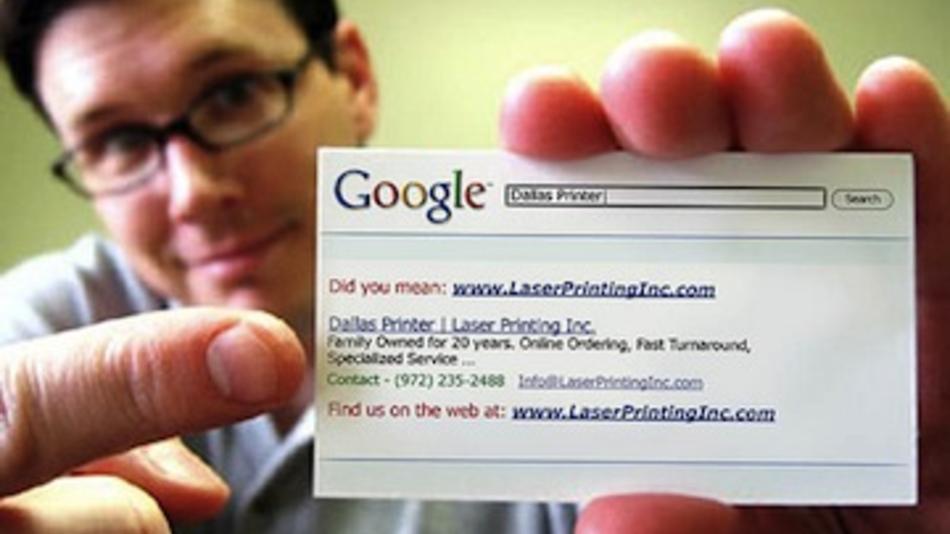
Business cards are a portable and compelling You


Carrying a card is the hallmark of a professional. In today’s connected world, and especially in the United States, business cards are part of one’s self-marketing arsenal. Still, business cards remain one of the few tangible ways to leave an impression well after you’re out of sight. Composure, a growing digital marketing agency, details 3 significant advantages with business cards: compatibility with the old world, first impressions matter a lot and reinforcement of your professionalism.

While technology seems to be everywhere, not everyone is as comfortable with it as the Gen Y or millennials. Given that the Baby Boomers and Gen X still hold the majority of executive (i.e., decision making) positions, respect shown to their way of business often leaves a professional impression. After all, in one’s everyday conversation, talking face-to-face with friends is as common and needed as messaging over the phone or Facebook. See quick primer byTheLadders, a premium job search company, on what details should be on your card.

Picture a big networking event, how do you think any single recruiter or executive can remember you? With swarms of college students like you, decision makers will face huge stacks of resumes with similar accomplishments and qualifications. With a business card, intrigue and creativity is useful and appreciated. To be sure, a compelling business card works better with a compelling personality, but how can they remember you after the event?

That’s where the business card comes in to cement that professional reputation long after a recruiting event or first meeting. For example, VistaPrint finds that, on average, recruiters and hiring managers keep a colour card ten times longer than a standard card (the usual plain white background).

Lastly, Smarterer, a fast-growing HR tech company, provides a compelling infographic for newbies to the professional world on the above information. 

We’d love to see your favourite business cards designs and ideas! Be sure to check out some of these awesome business cards to get some inspiration and be sure to get some business cards through VistaPrint below!


Saturday, February 2, 2013

Introduction to our Blog

Hello all,

I wanted to start our posts by setting the tone for this blog. CareerApp was made to help both employers and applicants find each other, make smart matches, and move forward in a way that is mutually beneficial.

We want to use this blog to share our opinions on HR trends, offer advice for job seekers, explain certain features of our product and why they might be useful to you- whomever you are, share great material we found that could help you - and more.

Feel free to offer comments, suggestions, or feedback and you can always reach me at phoebe@careerapp.me.

Best,

Phoebe Farber
Founder & CEO, Prospective Plus